
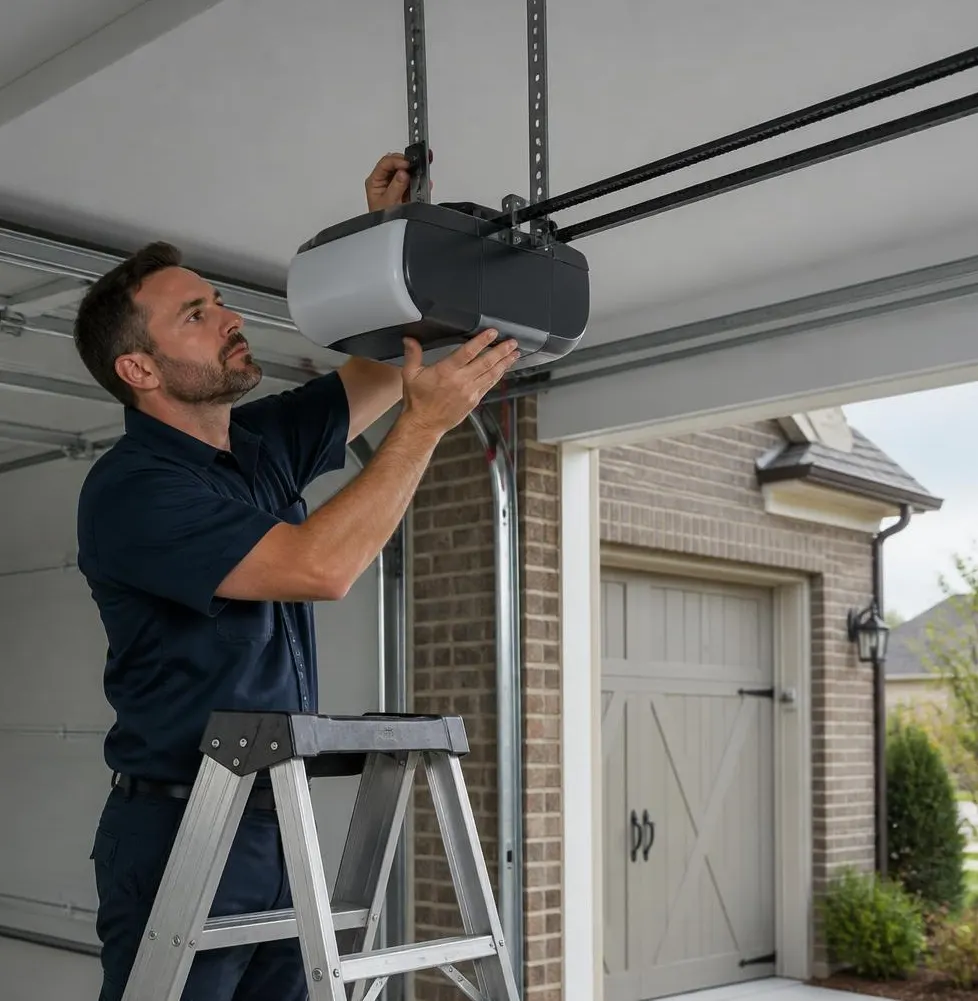
When the garage door starts squeaking, most homeowners reach for the can of WD-40 sitting on the shelf and spray down every hinge, roller, and track they can see. It's tempting because it's fast, free, and the squeak usually stops within a day or two. The problem is that WD-40 is a solvent, not a lubricant. It strips the grease that's already protecting the metal, and in a Wisconsin garage that means road salt, winter grit, and spring mud get pulled right into the moving parts instead of staying out. The squeak often comes back louder in a few weeks, and the rollers or hinges wear faster than they should.
A real once-a-season routine takes about 20 minutes, uses a handful of tools you likely already own, and actually protects the door instead of just quieting it down. Fall, right before the first hard freeze, is one of the best times to run through it, since everything you tighten and lubricate now has to survive months of cold, ice, and salt spray before spring thaw.
Tools You'll Need
- A sturdy stepladder
- A socket wrench or screwdriver set
- Silicone or lithium-based garage door lubricant (not WD-40 or household oil)
- A clean, dry rag
- Work gloves
- A flashlight
The 20-Minute Routine
1. Look Before You Touch
Walk the full length of both tracks with a flashlight. You're looking for dents, rust, gaps where the track pulls away from the wall, and any buildup of dirt, leaves, or dried salt residue from last winter's driveway. Note anything that looks bent or off-center, but don't try to bend a track back into place yourself.
2. Tighten the Hardware
Garage doors shake every time they open and close, and over months that vibration backs out screws and bolts. Go along the track brackets, the hinges between panels, and the mounting plates for the opener rail, and snug anything that's loose with your socket wrench. This alone fixes a surprising number of rattles and sags.
3. Lubricate the Moving Parts
Using the silicone or lithium spray, lubricate the rollers, hinges, and the opener's chain or screw drive. Wipe off any excess with the rag so it doesn't attract dust. Skip the springs entirely if you're not comfortable around them under tension, which we'll get to below. A light, even coat is all you need; more isn't better and just creates a mess that grit sticks to.
4. Clean the Tracks
Wipe down the inside of both tracks with a dry rag to clear out debris, especially the salt and sand residue that gets kicked up off the driveway all winter. A buildup here makes the rollers work harder and can throw the door off balance over time.
5. Check the Weatherstripping
Run your hand along the rubber seal at the bottom of the door and the vinyl trim along the sides. Look for cracking, flattening, or gaps where cold air, snow, or mice can get through. This piece takes a beating from Wisconsin winters, and a worn seal is one of the easiest things to replace before the deep cold sets in.
6. Test the Auto-Reverse Safety Feature
Place a block of wood flat on the ground under the door and run the closing cycle. The door should hit the wood and reverse immediately. Then test the photo-eye sensors near the bottom of the tracks by waving a hand through the beam while the door is closing. If either test fails, stop using the opener until it's fixed. This is a safety system, not a convenience feature.
Where to Stop: What's a Technician's Job
Everything above is safe for a homeowner with basic tools. What you should never attempt yourself:
- Springs – Torsion and extension springs are under enough tension to cause serious injury if they're adjusted or replaced incorrectly. If a spring looks stretched, rusted, or gapped, that's a call for Spring Replacement, not a DIY fix.
- Cables – Frayed or loose cables are a sign the system is under stress. Don't try to re-tension or replace them yourself.
- Opener force settings – If the auto-reverse test fails after you've checked the sensors, the internal force settings may need a technician's adjustment, not guesswork with a screwdriver.
- Panel or track damage – A dented panel or a track pulling away from the frame usually points to an alignment issue that needs to be corrected under load, which isn't a solo job.
When to Call Madison Garage Door Service
If your seasonal check turns up a spring that looks worn, a track that's pulling loose, or an opener that won't reverse properly, it's time to bring in a technician rather than push through it. Our Maintenance & Tune-Up service covers a full inspection, balance check, and hardware adjustment that goes beyond what's safe to do from a stepladder, and our Spring Replacement service handles the one component in your garage that genuinely isn't a DIY project. We serve homeowners throughout Madison, Sun Prairie, Middleton, Fitchburg, Verona, Cottage Grove, Monona, and McFarland, and we show up on time with the parts needed to get it done in one visit.
If your garage door needs more than a seasonal once-over before winter hits, call Madison Garage Door Service and we'll get it sorted before the first deep freeze.